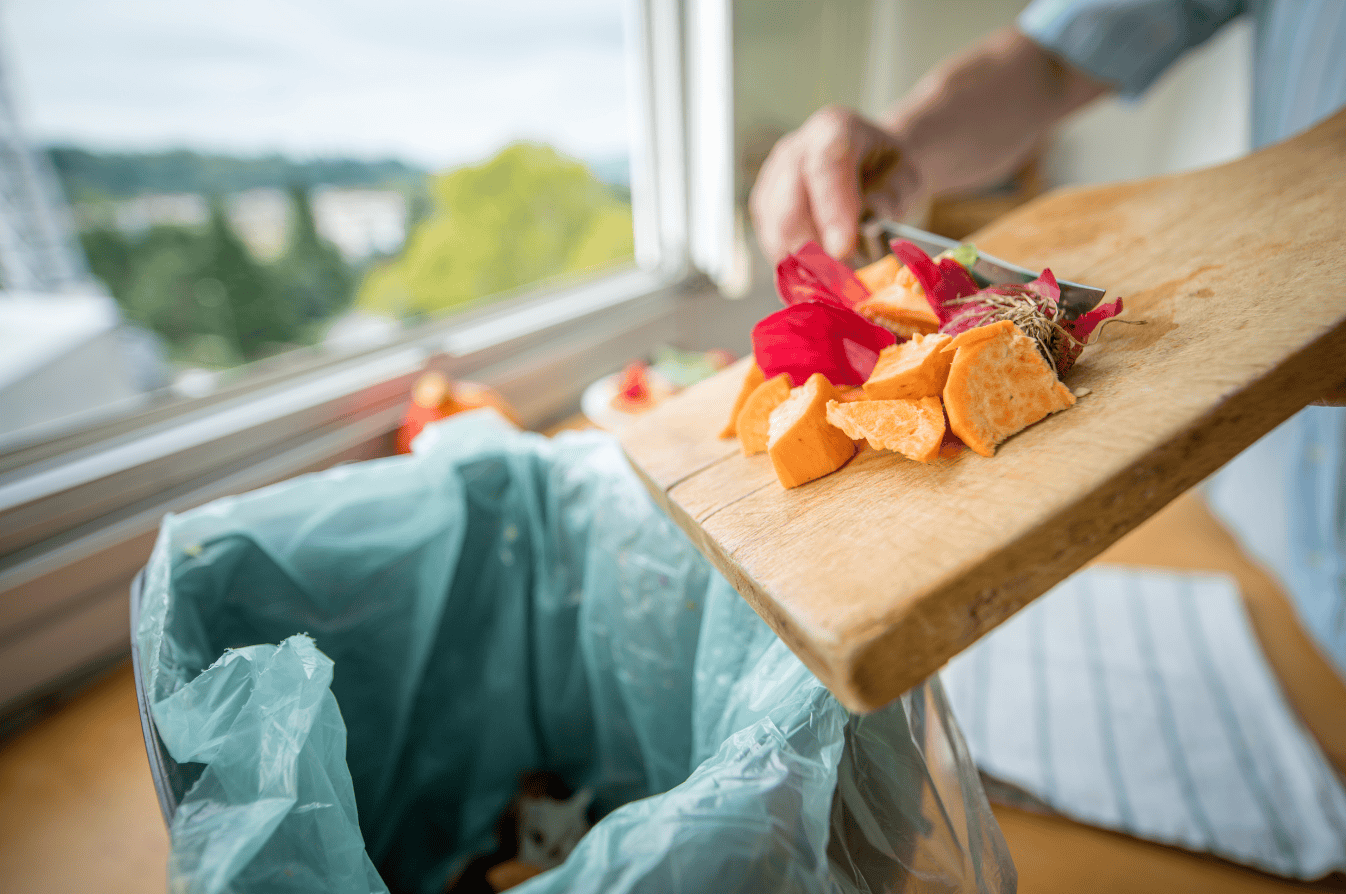
Council Cabinet will be asked to approve plans to award a new contract for managing and processing household food waste. This will enable the city to deliver weekly collections from 31 March 2026, as required by the Environment Act 2021.
To support the new weekly food waste collections, the service requires dedicated facilities, including a tipping location within the city boundary, for the separate collection of food waste. Treatment through anaerobic digestion has been chosen as the most sustainable and cost-effective way to treat food waste. This process will also produce renewable energy and nutrient-rich digestate, that can replace chemical fertilisers.
The contract, valued at around £750,000, will secure a local tipping destination for food waste collected across Derby and establish a specialist provider to recycle this material safely and efficiently. This decision is a significant step towards implementing the Government’s Simpler Recycling reforms and will support the wider rollout work already underway. The contract is due to begin in March 2026 for an initial two-year period, with the option to extend for up to a further three years to accommodate potential changes arising from Local Government Reorganisation across Derbyshire.
Recycling food waste through the new service will be significantly cheaper than disposing of it in the black bin, where treatment currently costs almost six times more. The service change will also reduce costs linked to garden waste, as brown bins will collect garden waste only from 31 March 2026, and material will be composted outdoors rather than processed through In-Vessel Composting, saving an estimated £240,000.
The new service is expected to divert around 4,845 tonnes of food waste from disposal each year, reducing carbon emissions and contributing to wider environmental goals.
Councillor Ndukwe Onuoha, Cabinet Member for Streetpride, Parks and Leisure, said:
This contract is essential for introducing weekly food waste collections in Derby. Anaerobic digestion provides a cleaner and more efficient method of recycling food waste, converting it into renewable energy and natural fertiliser. Now that the key elements of the service are coming together, we are well on our way to providing our residents with a greener, more efficient waste system.
From January 2026, all households will receive printed guidance with their new food waste containers, explaining how the service works and what residents need to do. Further details about Derby’s new weekly food waste collections, including what will be collected and how the service will operate from 31 March 2026, are already available at derby.gov.uk/bins.