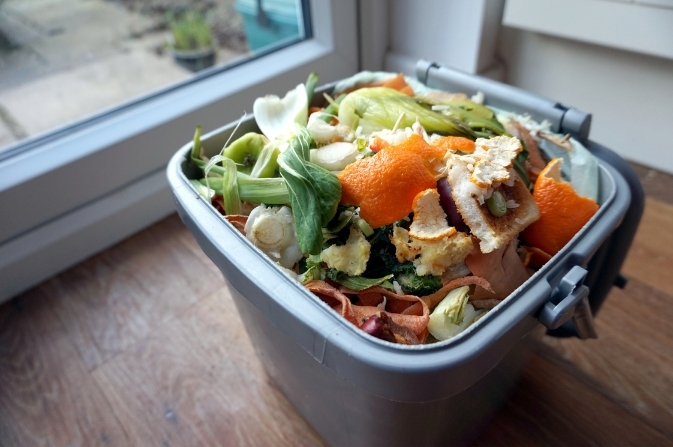
From Tuesday 31 March 2026, Derby residents will benefit from a new weekly food waste recycling service, to help increase recycling and support a greener city.
The change is part of the Government’s Simpler Recycling reforms under the Environment Act 2021, which require all councils to introduce separate weekly food waste collections.
Preparing for the new service
From January 2026, every household in Derby will receive:
- one 23-litre, 40cm tall, green outdoor food waste container with a lockable lid
- one 5-litre, 20cm tall, light grey indoor kitchen caddy with a lockable lid
- a printed guide explaining how to use the new service.
The small grey caddy is handy to have around the kitchen to collect food waste. Unlike home composting, this recycling process allows residents to line their caddy with any type of bag — such as bread bags, frozen food bags, carrier bags, plastic or compostable liners. All types of food can be included, from plate scrapings to bones, dairy products, bread, fruit and vegetables. Once full, the bag can be tied and transferred to the larger green container, which is stored outdoors for weekly collection by our teams.
Food waste makes up around one third of the average black bin by weight in Derby. Collecting it separately each week will mean:
- less full black bins
- lower disposal costs – it costs nearly six times more to dispose of food waste in black bins than to recycle it
- higher recycling rates for the city
- renewable energy and natural fertiliser created from waste
- money saved at home – with more food waste awareness, the average family could save around £1,000 a year by wasting less food.
Investment in Derby’s future
To deliver the new service, Defra has provided £2.7m in funding. This is being used to:
- purchase 14 new collection vehicles
- recruit new staff
- provide new containers for households
- deliver guidance and communications to residents.
What happens next
Until 30 March 2026: food waste can continue to go in brown bins alongside garden waste. From 31 March 2026: food waste should only go in the new green container. Brown bins will be for garden waste only, and black bins will be for general rubbish that cannot be recycled.
Food waste will be recycled through anaerobic digestion, a natural process that breaks it down in an enclosed system. This produces biogas, which is used to generate renewable energy, and a nutrient-rich fertiliser that supports farming and land regeneration.
Councillor Ndukwe Onuoha, Cabinet Member for Streetpride, Public Safety and Leisure, said:
This is one of the biggest changes to our waste and recycling services in recent years. By recycling food waste, households will benefit from more regular collections, as well as the feel-good factor from managing their waste more sustainably.
At the same time, we will reduce harmful greenhouse gases, generate renewable energy and provide natural fertiliser for farming.
Over the coming months, we will keep residents informed and help them prepare for 31 March 2026. Together, these everyday actions will add up to significant progress for Derby and our environment, as we continue to build a city we can all take pride in by keeping it clean and tidy, one street at a time.
More information about the new weekly food waste collections that starts 31 March 2026 can be found on derby.gov.uk/bins.