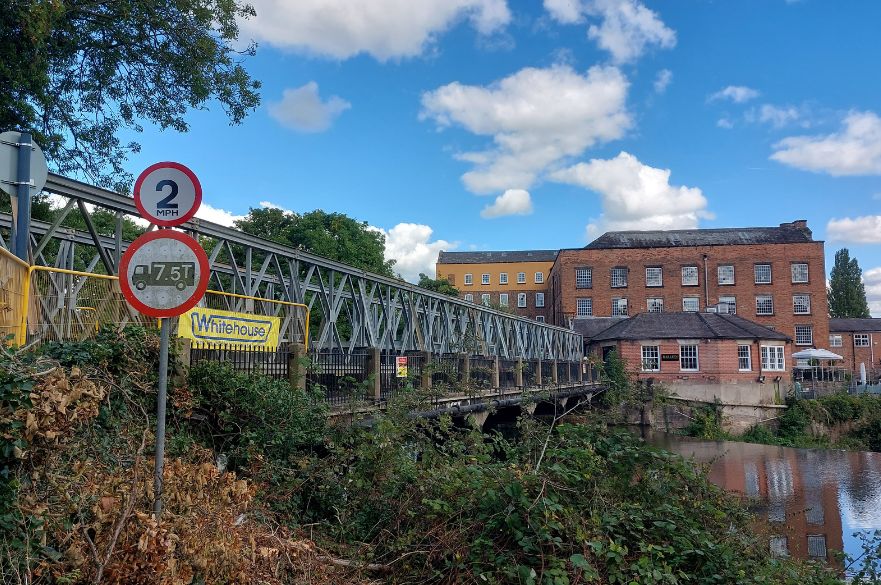
Derby City Council has now published a new Strategic Outline Business Case (SOBC) for a new permanent river crossing at Darley Abbey Mills.
This pivotal document lays the groundwork for restoring crucial access to the Mills complex and is a major milestone in the project.
The SOBC has identified a viable solution with that would see a new structure built offering full-time access for active travel and emergency access for motor vehicles.
The benefits of this option include:
- Safer, more reliable journeys for active travel users
- Reduced emissions in and around the Mills complex
- Better access to employment opportunities
- Better access for residents and businesses
- Increased resilience in the face of extreme weather and other emergencies.
The development of a full Outline Business Case will follow, subject to securing funding from the East Midlands Combined County Authority, who’s support has been key so far.
Since the closure of the original bridge due to safety concerns in May 2022, the Council has been diligently working to restore permanent access to the Mills complex.
Councillor Carmel Swan, Cabinet Member for Climate Change, Transport and Sustainability, states:
Projects of this magnitude require time and thorough planning to ensure they are viable, meet the needs of the community, and protect the area’s World Heritage Status. Rest assured, we are committed to providing the necessary infrastructure to keep the Mills complex connected. I have been actively working on obtaining very competitive funding from EMCCA in my role on the Transport Committee.”
We will now await the funding decision from EMCCA that will allow us to push on with our proposals and restore permanent access to the Mills from the west.
When the original bridge was closed, the Council acted swiftly to implement a medium-term solution – Walters Walkway – while working on plans for a long-term solution. The recent closure of this temporary bridge has highlighted how vital this scheme is for the community.
Councillor Swan continues:
Although the Council does not own the original bridge, we intervened to maintain essential access safely. However, this was not and never has been sufficient, and a permanent solution has always been necessary and a key priority.
I understand the recent closure of Walters Walkway will have caused distress for those reliant on it but be assured that we are actively working with partners at EMCCA and the Environment Agency to ensure a suitable solution while we continue to work towards a permanent bridge.
The Strategic Outline Business Case and other details have been published on the Derby City Council website.