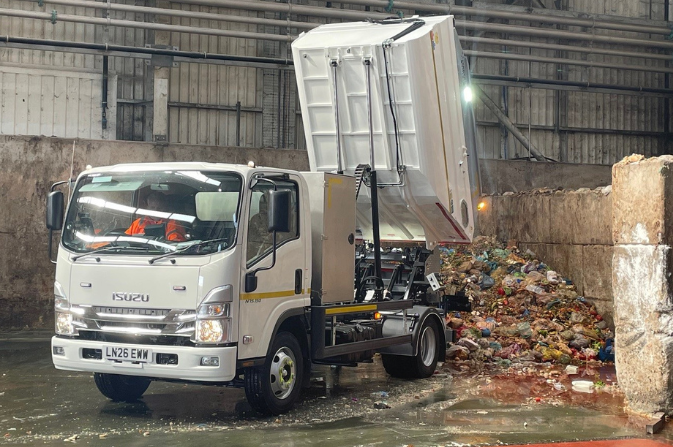
More than 430 tonnes of food waste have been diverted from black bins during the first month of food waste collections in Derby.
All local authorities in England were required to introduce weekly food waste collections by 31 March, under the Government’s Environment Act 2021 and the ‘Simpler Recycling reforms.
While many authorities are still navigating industry-wide shortages and manufacturing delays, Derby City Council successfully met the Government’s deadline by proactively hiring additional staff and sourcing temporary transport.
The new service is helping reduce the amount of waste sent for disposal, cut emissions and support Derby City Council’s Climate Change Action Plan.
Collected food waste is processed locally at Severn Trent Green Power in Spondon, where it is used to generate renewable energy.
Councillor Ndukwe Onuoha Cabinet Member for Cabinet Member for Streetpride, Parks and Leisure, said:
Collecting 430 tonnes of food waste in just four weeks is a very encouraging start and a clear sign that Derby residents are embracing this new service.
Seeing such a significant amount of waste diverted so early on shows that these small changes at home are already making a real difference. I’d like to thank residents for their cooperation and efforts to adapt to this national change.
Like many councils across the country, Derby has faced challenges linked to a nationwide shortage of specialist food waste collection vehicles, meaning temporary hired - not specialist - vehicles had to be used. Our teams have worked very hard to ensure we’re fulfilling our requirements under the Government reforms, and we’re confident the service will continue to strengthen in the weeks ahead.
This is an important step forward for Derby, helping us reduce waste, lower emissions and build a cleaner, greener city for the future.
Providing the food waste collection service brings many benefits, including:
- Environmental impact: Diverting waste to anaerobic digestion allows it to be transformed into biogas for green energy and nutrient-rich fertiliser, rather than being sent for disposal.
- Economic efficiency: Recycling food waste this way is significantly more cost effective than disposing of it through general waste, helping create a more sustainable and financially resilient service for the city in the long term.
- Reduced household waste: Residents see exactly how much food is being discarded. With food waste currently costing the average household approximately £1,000 per year, the new service can help families identify where they can save money.
To help the service run smoothly, residents are encouraged to:
- Use the kitchen caddy each day to collect food waste before transferring it to the outdoor green container, ready for weekly collection on the usual bin day.
- Any bag or liner already available at home can be used in the kitchen caddy, including bread bags, frozen food bags, vegetable packaging or carrier bags. Reusing these bags helps reduce waste and means there is no need to buy specialist liners.
- The green container should be placed out for collection with the handles in the upright position and the lid fully locked. Writing a house number on the container is also recommended to help avoid containers being mixed up or misplaced.
- Properties with shared bins, such as flats, HMOs and other shared housing, will be assessed separately to ensure they have the most suitable food waste collection system. Further information will be shared where needed.
- Brown bins are for garden waste only from now on – any brown bins containing food waste will not be collected.
More information about collection guidance, container requests and food waste recycling can be found on our website.