Houses in Multiple Occupation: planning requirements
Planning guidance
Where a proposal would create a new House in Multiple Occupation (HMO), regard will be had to any potential adverse impacts which may be caused by the proliferation of HMOs on the local environment, including exacerbation of parking problems. Where there is evidence that such proposals are likely to cause unacceptable harm to the local environment, including adverse impacts on the character or amenity of an area, proposals will be resisted.
In particular, proposals which would create new HMOs will only be permitted where the following criteria can also be met:
- The proposal would not lead to the creation of three or more adjacent HMO properties.
- The proposal would not lead to ‘sandwiching’ of a residential property between two HMO properties or a HMO and a non-residential property.
- The proposal would not lead to more than 10% of the properties within a 50m radius of the development site being used as HMOs.
Where a new HMO is proposed which will include 17 or more individuals living in one dwelling, the Council may seek to secure Planning Obligations to mitigate any impacts on local facilities and infrastructure identified as being generated by the proposal.
When submitting a planning application which involves the creation of a new HMO, applicants should provide their own assessment of how their proposals meet the requirements of this guidance.
Avoiding a concentration of HMOs
As well as forming part of the city’s housing supply and contributing towards meeting housing needs, HMO conversions can also enable the continued viable use of older housing and provide an effective use of land and buildings. However, HMOs typically intensify the use of properties, with more resident and visitor movements than a typical family home, and concentrations of them can impact on the amenity of neighbouring properties and the wider neighbourhood.
Therefore, in order to help ensure mixed and balanced communities and to ensure that new development does not have an unacceptable adverse impact on amenity and quality of life, this guidance sets out restrictions to limit the concentration of HMOs in small areas and to manage the siting of HMOs relative to other HMOs. This will contribute to retaining local character, help to ensure a mix of house types and tenures, and reduce potential residential amenity issues. To achieve this the Council will apply three measures:
- a concentration threshold
- restricting the sandwiching of properties
- restricting three adjacent HMOs.
Applying a concentration threshold
Planning permission will not normally be granted for new HMOs, or for proposals to extend existing HMOs, where the proportion of HMOs exceeds, or will exceed, 10% of the properties (residential and commercial) within a 50-metre radius of the application property.
The radius will be measured from the mid-point of the front boundary of the application property and calculated through the inclusion of properties that have a Land and Property Gazetteer address point within that radius. Existing properties that have been sub-divided into flats will be counted as single properties for the purposes of the calculation, as some of the issues that can be associated with HMOs can also be associated with flat conversions. However, purpose-built flats will be counted on an individual basis, as they are not subject to the same constraints as flat conversions and issues should have been fully addressed as part of the planning process.
In order to identify properties in HMO use, the council will utilise data held on the council’s GIS HMO layer, which identifies HMOs from a variety of sources, including HMO licensing data, planning records and Council Tax data. However, this may not be an exhaustive record of all HMOs in an area, because some HMOs may not be known to the council, particularly if they are too small to have required planning permission or be subject to mandatory licensing. Further investigation may therefore be required as part of the planning application process in response to new or updated information about the presence of HMOs in the locality.
There are limited circumstances where permission could be granted for an HMO that results in the 10% threshold being exceeded. They might include where:
- there is a strong physical barrier, such as a railway line, between the application property and established HMOs
- there are a limited number of properties within the 50-metre radius, or
- the nature of the application property means that impacts will be lessened for example, the property could be detached and have a substantial curtilage.
An example of applying the concentration threshold is shown in figure 1.1 a proposed HMO is shown in the centre and properties with an address point within 50 metres of the proposed HMO are identified. If the proportion of properties in use as an HMO exceeds, or will exceed, more than 10% of the properties within the 50-metre buffer zone, then permission will not normally be granted.
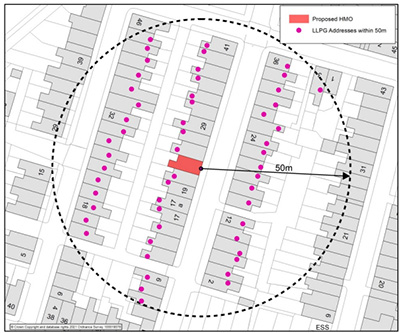
Figure 1.1 Applying a concentration threshold
Restricting the sandwiching of properties
Planning permission will not normally be granted for the development of HMOs that lead to the ‘sandwiching’ of residential properties. Sandwiching occurs when a non-HMO residential property has an HMO on either side. This has the potential to lead to amenity issues for the non-HMO property due to the greater intensity of use of the HMOs.
Circumstances where permission might be granted for an HMO that ‘sandwiches’ a non-HMO residential property are limited but could include where there is a significant gap between the curtilages of the properties, or where properties are set within large gardens or curtilages.
An example is shown in figure 1.2 the proposed HMO (shaded) would result in the residential property at No. 33 being sandwiched between two HMOs. This would not normally be granted planning permission.
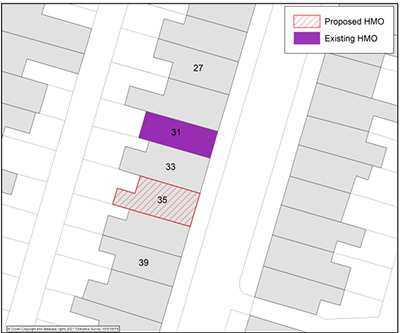
Figure 1.2 Restricting the sandwiching of properties
Restricting three adjacent HMOs
Planning permission will not normally be granted for proposals that would result in a block of three or more adjacent HMOs. Streets can sometimes become dominated by HMOs, which has the potential to lead to amenity issues for the non-HMO properties, particularly those opposite or adjacent, due to the greater intensity of use of the HMOs.
Circumstances where permission might be granted for a proposal that would result in a block of three or more adjacent HMOs are limited but might include where there is a significant gap between the curtilages of properties, or where properties are set within large gardens or curtilages.
Housing standards
Find out more about houses in multiple occupation in our housing standards pages